
Business Process Outsourcing (BPO) is one of the fastest-growing industries worldwide, especially in countries like the Philippines. If you are searching for “BPO meaning”, you may be exploring career opportunities, researching outsourcing strategies, or trying to understand how companies operate globally.
In simple terms, BPO refers to the practice of outsourcing specific business tasks to a third-party service provider. These tasks can range from customer support and technical support to payroll management and data processing.
Today, millions of professionals work in the BPO industry, and companies around the world rely on outsourcing to improve efficiency and reduce operational costs.
In this guide, we’ll explain:
- The complete BPO meaning
- How business process outsourcing works
- Different types of BPO services
- Why the Philippines dominates the global BPO industry
- Popular BPO jobs and career opportunities
What Is BPO? (BPO Meaning Explained)
The BPO meaning stands for Business Process Outsourcing, which is when a company hires an external provider to manage certain business functions.
Instead of handling all operations internally, companies outsource specific processes to specialized firms that can perform the work more efficiently or at a lower cost.
For example:
A US-based e-commerce company might outsource:
- Customer service
- Technical support
- Order processing
- Data entry
to a BPO company in the Philippines.
This allows the company to focus on its core business activities, such as product development or marketing.
Simple BPO Definition
BPO = Contracting a third-party company to perform business processes that were previously handled internally.
BPO Meaning in Call Center
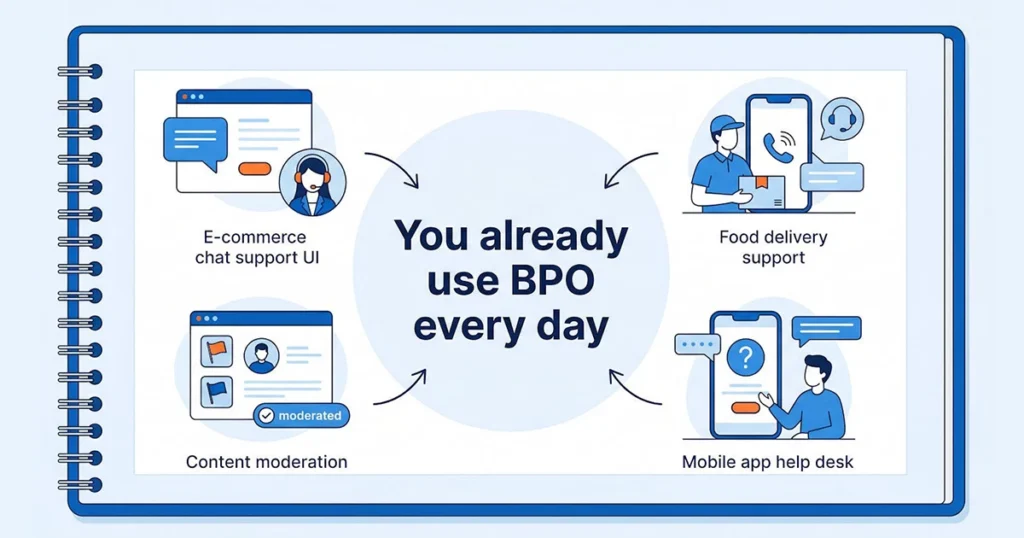
When people search for “BPO meaning in call center”, they are usually referring to customer service or support operations.
A call center is one of the most common types of BPO services.
Typical call center BPO services include:
- Customer support
- Technical support
- Sales support
- Billing inquiries
- Complaint handling
For example:
A telecommunications company may outsource its 24/7 customer support hotline to a BPO provider.
Employees working in these roles are often called:
- Customer Service Representatives (CSR)
- Technical Support Representatives (TSR)
- Sales Agents
These jobs are extremely common in the Philippine BPO industry.
Types of BPO Services
Business process outsourcing covers a wide range of services. Generally, BPO services can be divided into three main categories.
1. Back Office BPO
Back office outsourcing focuses on internal business functions.
Examples include:
These tasks usually support the company internally rather than interacting with customers.
2. Front Office BPO
Front office outsourcing involves direct interaction with customers.
Examples include:
- Customer service
- Sales support
- Technical support
- Help desk services
Most call center jobs fall under front office BPO.
3. Knowledge Process Outsourcing (KPO)
KPO involves specialized services that require advanced expertise.
Examples include:
- Market research
- Financial analysis
- Legal process outsourcing
- Data analytics
- Healthcare information management
These roles often require higher education or specialized training.
Business Process Outsourcing Examples
To better understand the BPO meaning, here are some real-world outsourcing examples.
Customer Support Outsourcing
A global e-commerce company outsources its customer support team to a Philippine BPO provider to handle inquiries 24/7.
IT Help Desk
A software company outsources technical support to a BPO company that provides trained IT professionals.
Finance and Accounting
Large corporations outsource accounting services such as:
- bookkeeping
- tax preparation
- financial reporting
HR and Recruitment
Some companies outsource hiring processes, including resume screening and interview coordination.
Why the Philippines Is a Global BPO Leader
The Philippines is one of the largest BPO hubs in the world, competing with countries like India.
Several factors make the Philippines ideal for outsourcing.
Strong English Communication
The Philippines has one of the highest English proficiency rates in Asia, making communication with international customers easier.
Skilled Workforce
Millions of Filipinos graduate from universities each year, many with degrees in business, IT, and communications.
Cultural Compatibility
Filipino professionals are known for strong customer service skills and cultural familiarity with Western markets.
Cost Efficiency
Companies can significantly reduce operational costs while maintaining high-quality service.
Because of these advantages, major multinational companies outsource operations to the Philippines.
Common BPO Jobs in the Philippines
The BPO industry offers a wide range of job opportunities.
Some of the most popular roles include:
Customer Service Representative
Handles customer inquiries through phone, email, or chat.
Technical Support Representative
Assists customers with technical issues related to products or services.
Sales Representative
Focuses on selling products or services through inbound or outbound calls.
Data Analyst
Processes and analyzes business data for companies.
Virtual Assistant
Supports businesses with administrative tasks remotely.
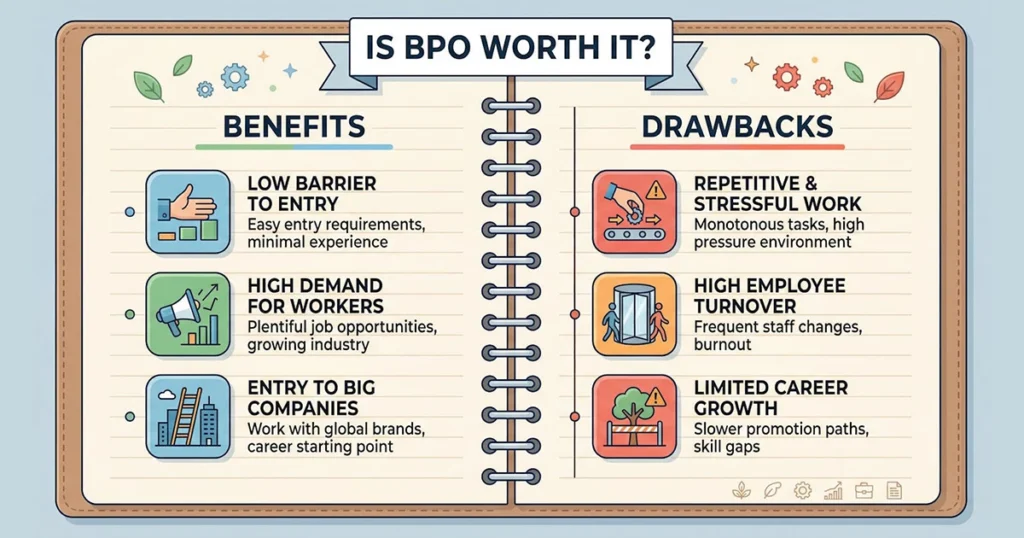
Many of these positions offer:
- Competitive salaries
- Career growth opportunities
- Flexible shifts
If you are looking for BPO opportunities, platforms like Bossjob help connect job seekers with companies hiring in the BPO industry.
Advantages of BPO for Companies
Companies choose outsourcing because it provides several strategic benefits.
Lower Operational Costs
Hiring outsourced teams can be significantly cheaper than building in-house teams.
Access to Global Talent
Businesses can access skilled professionals worldwide.
Scalability
Outsourcing allows companies to scale operations quickly during peak demand.
Focus on Core Business
By outsourcing non-core tasks, companies can focus on innovation and growth.
Challenges of BPO
While outsourcing has many advantages, it also presents some challenges.
Data Security Concerns
Companies must ensure their outsourcing partners follow strict data protection standards.
Communication Barriers
Time zone differences or cultural misunderstandings can affect collaboration.
Quality Control
Maintaining consistent service quality requires strong management and monitoring.
The Future of the BPO Industry
The global BPO market continues to grow rapidly.
Several trends are shaping the future of outsourcing:
- AI-assisted customer support
- Remote BPO teams
- Automation and chatbots
- Data analytics services
- Specialized outsourcing services
Despite automation, human agents remain essential for complex customer interactions.
The Philippines is expected to remain one of the top outsourcing destinations globally.
How to Start a Career in the BPO Industry
If you’re interested in working in BPO, here are a few steps to get started:
- Improve your English communication skills
- Develop customer service experience
- Learn basic technical troubleshooting
- Prepare for common BPO interview questions
- Apply through trusted job platforms
Job platforms like Bossjob help job seekers find verified companies hiring in the BPO sector.
FAQ About BPO
What does BPO mean?
BPO stands for Business Process Outsourcing, which means contracting a third-party company to handle certain business functions such as customer support, payroll, or IT services.
What is BPO in a call center?
In call centers, BPO refers to outsourcing customer service operations to external providers who handle calls, emails, or chats on behalf of a company.
Why do companies use BPO?
Companies use BPO to reduce operational costs, access global talent, improve efficiency, and focus on their core business functions.
Is BPO a good career in the Philippines?
Yes. The BPO industry in the Philippines offers competitive salaries, strong career growth, and opportunities to work with international companies.
Conclusion
Understanding the BPO meaning helps explain why outsourcing has become a core strategy for modern businesses. By delegating specific business processes to specialized providers, companies can improve efficiency, reduce costs, and scale operations faster.
At the same time, the BPO industry provides millions of professionals—especially in the Philippines—with rewarding career opportunities across customer service, IT support, finance, and more.
If you’re exploring opportunities in the outsourcing industry, platforms like Bossjob can help you discover companies hiring across the growing Philippine BPO sector.


