
Introduction
Whether you’re applying for a new job, reviewing an employment contract, or planning your career, understanding your employment status is essential.
Employment status determines your workplace rights, tax obligations, eligibility for employee benefits, and overall job security. It also influences how employers classify workers and comply with labor regulations.
In this guide, you’ll learn:
- What employment status means
- Why employment status matters
- The different types of employment status
- Employee vs independent contractor differences
- How employment status affects taxes and benefits
- How to determine your employment status
What Is Employment Status?
Employment status refers to the legal classification of a worker based on their relationship with an employer.
This classification determines:
- Employment rights
- Employee benefits
- Tax obligations
- Job security
- Workplace protections
- Legal responsibilities
In simple terms, employment status defines how a person works and what rights and obligations they have under labor laws.
Employment Status Examples
A worker’s employment status can vary depending on the arrangement:
- A software engineer working 40 hours per week for one company is usually a full-time employee.
- A freelance graphic designer serving multiple clients is generally self-employed.
- A retail assistant hired only during the holiday season is considered a seasonal employee.
Understanding these distinctions helps workers make informed career decisions and protects employers from worker misclassification risks.
Why Employment Status Matters
Many people only think about employment status when issues arise involving taxes, benefits, or workplace rights.
However, employment status affects several important areas of your professional life.
Legal Rights and Protections
Different worker classifications receive different legal protections.
Depending on your employment status, you may be entitled to:
- Minimum wage protections
- Paid annual leave
- Sick leave
- Overtime pay
- Workplace safety protections
- Notice periods before termination
Access to Employee Benefits
Employment status often determines eligibility for:
- Health insurance
- Retirement plans
- Paid vacation
- Performance bonuses
- Maternity and paternity leave
- Professional development programs
Tax Responsibilities
Employment classification also affects taxation.
Employees typically have taxes withheld automatically by employers.
Self-employed individuals and contractors are usually responsible for managing their own tax obligations.
Career Development Opportunities
Your employment status may influence:
- Promotion opportunities
- Internal training programs
- Leadership development initiatives
- Long-term career progression
Types of Employment Status
Several employment classifications are commonly used around the world.
Understanding these categories can help job seekers identify opportunities that align with their career goals.
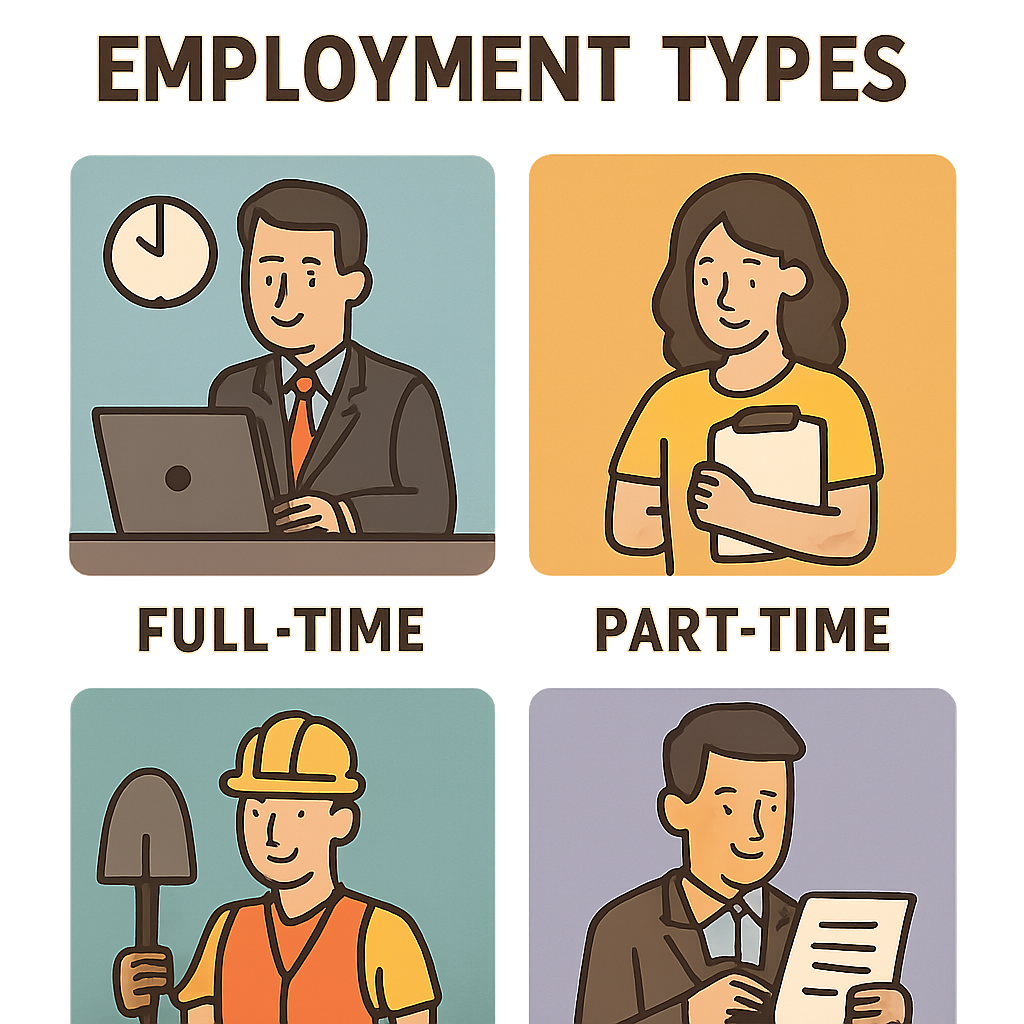
Full-Time Employment
Full-time employment is the most common form of work arrangement.
Employees generally work between 35 and 40 hours per week and receive a fixed salary or hourly wage.
Benefits of Full-Time Employment
- Stable income
- Paid leave
- Health insurance
- Retirement contributions
- Career advancement opportunities
Example
A marketing manager working 40 hours per week at a technology company.
Part-Time Employment
Part-time employees work fewer hours than full-time workers.
This arrangement is popular among:
- Students
- Parents
- Retirees
- Individuals seeking flexible schedules
Advantages
- Better work-life balance
- Greater flexibility
- Supplemental income opportunities
Challenges
- Limited benefits
- Lower earnings
- Fewer promotion opportunities
Example
A customer service representative working 20 hours per week.
Temporary Employment
Temporary employees are hired for a specific project or period.
Temporary positions are common in:
- Administrative support
- Healthcare
- Manufacturing
- Information technology
Example
A project coordinator hired for a six-month product launch.
Seasonal Employment
Seasonal employees are hired during periods of increased business demand.
Examples include:
- Retail workers during holiday shopping seasons
- Hospitality staff during tourism peaks
- Agricultural workers during harvest periods
Seasonal employment offers valuable short-term income opportunities but typically provides limited long-term security.
Casual Employment
Casual employees work on an as-needed basis.
Employers are generally not required to provide guaranteed working hours.
Casual work is common in:
- Hospitality
- Retail
- Event management
- Food service
Self-Employment
Self-employed individuals operate their own businesses and earn income independently.
Examples include:
- Business consultants
- Agency owners
- Online entrepreneurs
- Freelance professionals
Advantages
- Greater flexibility
- Increased autonomy
- Potential for higher earnings
Challenges
- Income variability
- Self-managed taxes
- No employer-sponsored benefits
Independent Contractors
Independent contractors provide services under contractual agreements rather than traditional employment relationships.
Unlike employees, contractors often:
- Control their schedules
- Choose their clients
- Provide their own equipment
- Manage their own taxes
Examples
- Freelance developers
- Designers
- Writers
- Recruiters
- Consultants
Employee vs Independent Contractor
One of the most common employment classification questions concerns the difference between employees and independent contractors.
| Factor | Employee | Independent Contractor |
|---|---|---|
| Work Schedule | Controlled by employer | Controlled by worker |
| Tax Handling | Employer-managed | Self-managed |
| Benefits | Usually provided | Usually not provided |
| Job Security | Higher | Lower |
| Equipment | Employer-provided | Worker-provided |
| Number of Clients | Usually one employer | Multiple clients |
Worker misclassification can create legal and financial risks for both employers and workers, making proper classification essential.
Employment Status Examples in Real Life
The following examples demonstrate how employment status applies in practice.
Example 1: Full-Time Employee
A software engineer employed by a fintech company and receiving health insurance, paid leave, and retirement benefits.
Example 2: Independent Contractor
A freelance web designer working for multiple businesses on separate contracts.
Example 3: Seasonal Employee
A retail sales associate hired specifically for the holiday shopping season.
Example 4: Part-Time Employee
A university student working evening shifts at a restaurant.
How Employment Status Affects Taxes
Tax obligations vary significantly depending on employment classification.
Employees
Employers generally handle:
- Income tax withholding
- Payroll taxes
- Social security contributions
- Employment-related reporting

Self-Employed Workers and Contractors
Workers are typically responsible for:
- Filing tax returns
- Reporting business income
- Managing quarterly tax payments
- Tracking deductible expenses
Before accepting a job offer, it’s important to understand how your employment status will affect your net income.
How to Determine Your Employment Status
If you’re unsure about your employment status, consider the following questions.
Who Controls Your Work?
The more control an employer has over your schedule and responsibilities, the more likely you are classified as an employee.
Can You Work for Multiple Clients?
Independent contractors typically have the freedom to work for multiple organizations.
Do You Receive Employee Benefits?
Access to benefits often indicates traditional employee status.
Are Taxes Automatically Deducted?
Automatic payroll deductions are commonly associated with employee classification.
Review Your Employment Agreement
Employment contracts often specify worker classification and responsibilities.
If uncertainty remains, seek advice from:
- Human Resources departments
- Employment lawyers
- Tax professionals
- Government labor agencies
Frequently Asked Questions About Employment Status
What is employment status?
Employment status is the legal classification that defines a worker’s relationship with an employer and determines their rights, benefits, and tax responsibilities.
Why is employment status important?
Employment status affects legal protections, employee benefits, taxation, and job security.
What are the main types of employment status?
Common employment types include:
- Full-time employment
- Part-time employment
- Temporary employment
- Seasonal employment
- Casual employment
- Self-employment
- Independent contracting
How can I check my employment status?
Review your employment contract, payroll records, benefits eligibility, and tax arrangements.
Can employment status change?
Yes. Workers may transition between different employment classifications throughout their careers.
Final Thoughts
Understanding employment status is essential for making informed career decisions and protecting your workplace rights.
Whether you’re seeking a full-time position, considering freelance work, or evaluating a contract opportunity, knowing your employment classification can help you understand your benefits, tax obligations, and long-term career prospects.
Taking the time to review your employment status today can help you avoid legal, financial, and professional challenges in the future.
Looking for a Full-Time or Remote Job?
Explore thousands of verified opportunities on Bossjob and connect directly with employers through instant chat.


