
On formal occasions, correct dressing is not only related to personal image, but it also represents professionalism, respect for others and the event. The summary below follows the systematic discussion of the essential information of formal dresses in order to make you appear confident and graceful at significant occasions.
What is Formal Attire?
Formal attire refers to a standardised clothing system suitable for solemn, professional, or ceremonial occasions. Formal attire for men typically means a suit, dress shirt, tie, and leather shoes. Formal attire for women, it includes tailored suits, dresses, blouses, and formal shoes.
Key Principles
- Colours: It is dominated by black, grey, navy and white, which promotes stability and neutrality.
- Fabrics: High-quality materials such as fine wool, silk, and premium blends are preferred, highlighting texture and drape.
- Tailoring: It should fit well, it must have straight lines and organised silhouettes. Eschew loose as well as tight garments.
- Etiquette Rules: The proper technique of buttoning, the proper duration of jackets and sleeves and modest accessories are basic requirements.
Formal Attire vs Semi Formal Attire
Before choosing an outfit, it is important to understand the distinction between formal and semi-formal dress codes, as they signal different levels of professionalism and ceremony.
| Category | Formal Attire | Semi-Formal Attire |
|---|---|---|
| Men | Dark suit, dress shirt, tie, leather dress shoes | Suit or blazer with dress shirt, tie optional, loafers or derbies |
| Women | Tailored suit, structured dress, closed-toe heels | Dress, skirt or trousers with blouse, heels or elegant flats |
| Occasions | Ceremonies, board meetings, formal business events | Dinners, networking events, corporate gatherings |
| Accessories | Minimal, refined jewelry, classic watch, leather bag | Slightly more flexibility, subtle fashion elements allowed |
Formal attire emphasises authority and formality, while semi-formal attire for women and men offers more flexibility while maintaining professionalism. The choice should be based on the solemnity of the occasion.
Type of Formal Attires
Formal attire can be further divided based on different occasions. Dressing flexibly to match the setting is essential.
Office Formal Attires
Formal wear in offices focuses on sharpness, a high level of professionalism and comfort in everyday work setups. It has embraced some modernism, but in a subtle way, and is traditional and formal.
👨 For Men:
Wear a dark suit that fits well and a white shirt. Silk ties are to be neatly knotted. There should be the presence of simple leather shoes, a belt and a watch.
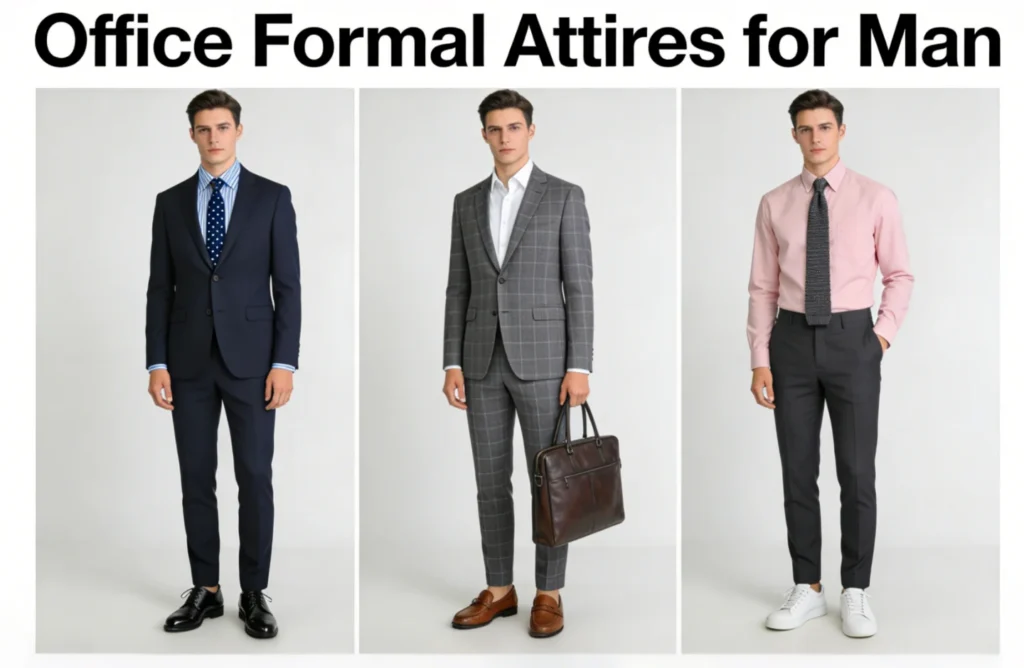
- Navy single-breasted suit + light blue pinstripe shirt + navy polka dot tie + black derby shoes.
- Grey plaid suit, medium + white poplin shirt (tie optional) + brown loafers + leather briefcase.
- Charcoal slim pants + white Oxford shirt, pale pink + dark grey knit tie + white minimal sneakers.
👩 For Women:
The important ones are neutral tones and quality material. Choose suits of clothes that are well-cut, mid or low-heeled shoes, designed bags, and finely-cut jewellery.
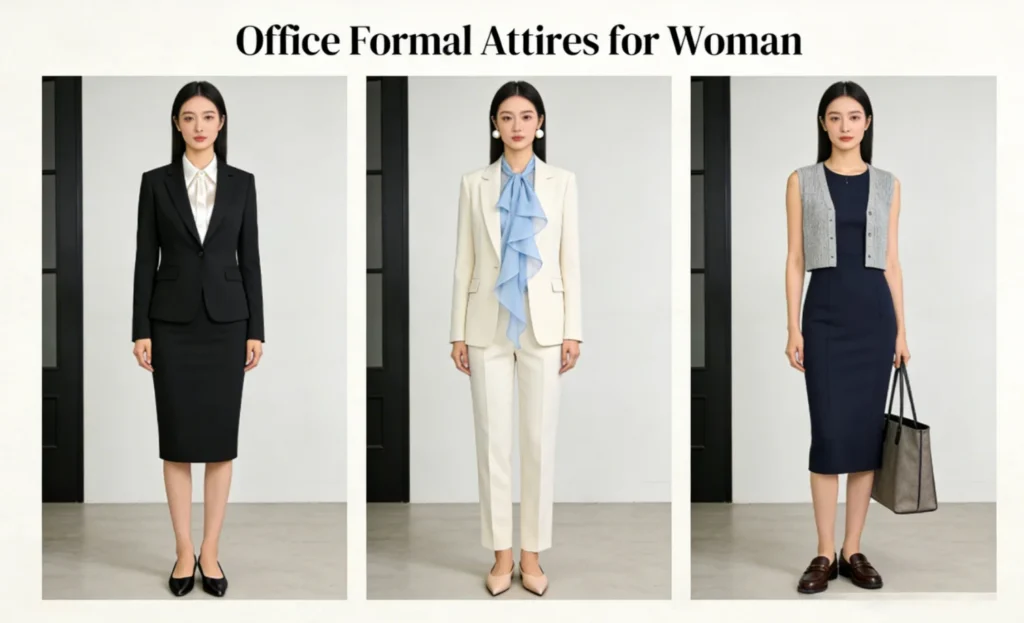
- Black fitted blazer + same knee-length pencil skirt + white silk blouse + black mid-heel pumps.
- Trouser suit cream + light blue chiffon bow blouse + nude pointed flats + pearl earrings.
- Navy sleeveless sheath, light grey, cropped cardigan, dark brown loafers, tote bag.
Formal Business Attire
Formal business attire is used for board meetings and high-level engagements. It requires precision, conservatism, and understated luxury to project authority.
🤵 For Men:
White shirt, dark silk tie, and polished black Oxford shoes form the standard. Accessories may include cufflinks, a pocket square, and a luxury watch.
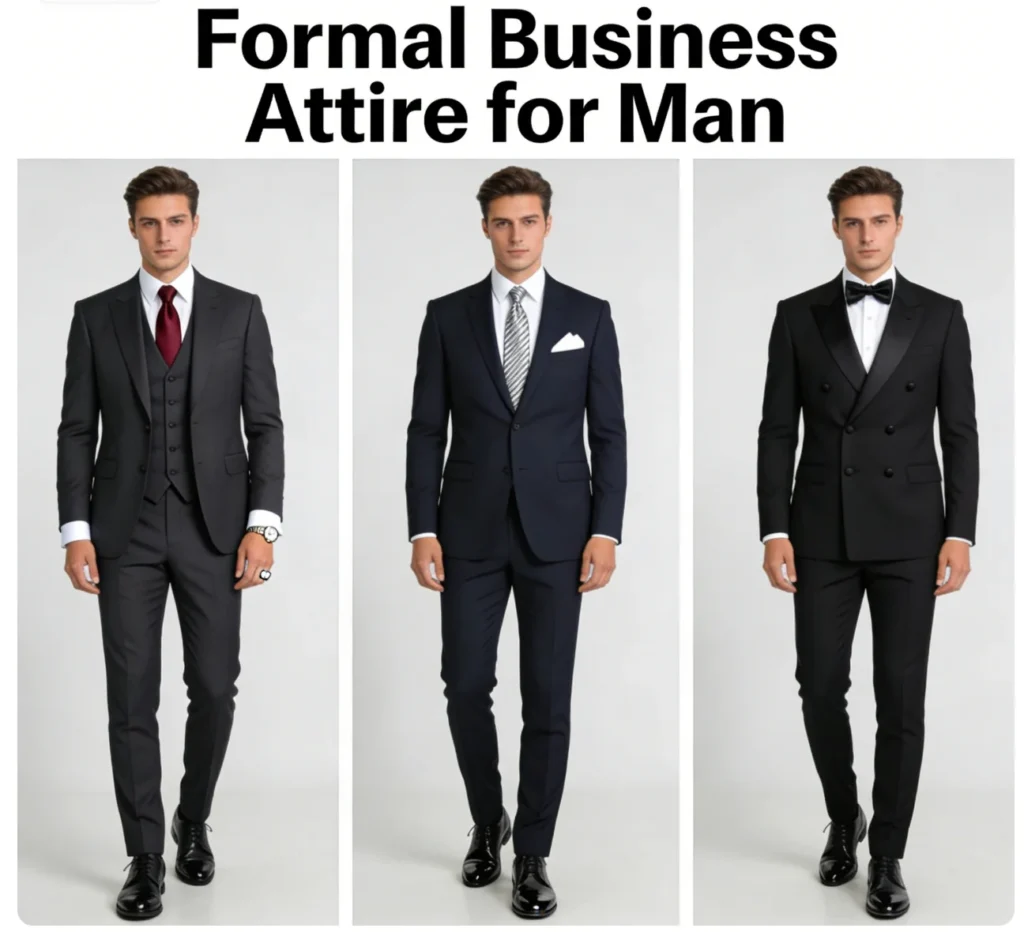
- Three-piece charcoal suit, shirt, tie, and Oxfords (French cuff) + burgundy silk tie + black Oxfords + platinum cufflinks.
- Dark Navy suit + white shirt + silver striped tie + black patent Oxfords + white pocket square.
- Black, double-breasted suit, in addition to white shirt and black bow tie (evening) + Oxfords, patent leather.
👩 For Women:
It is best to wear matching suits or light tailored dresses with jackets. Select closed-toe heels, crossed handbags, sheer stockings, and fancy jewellery.
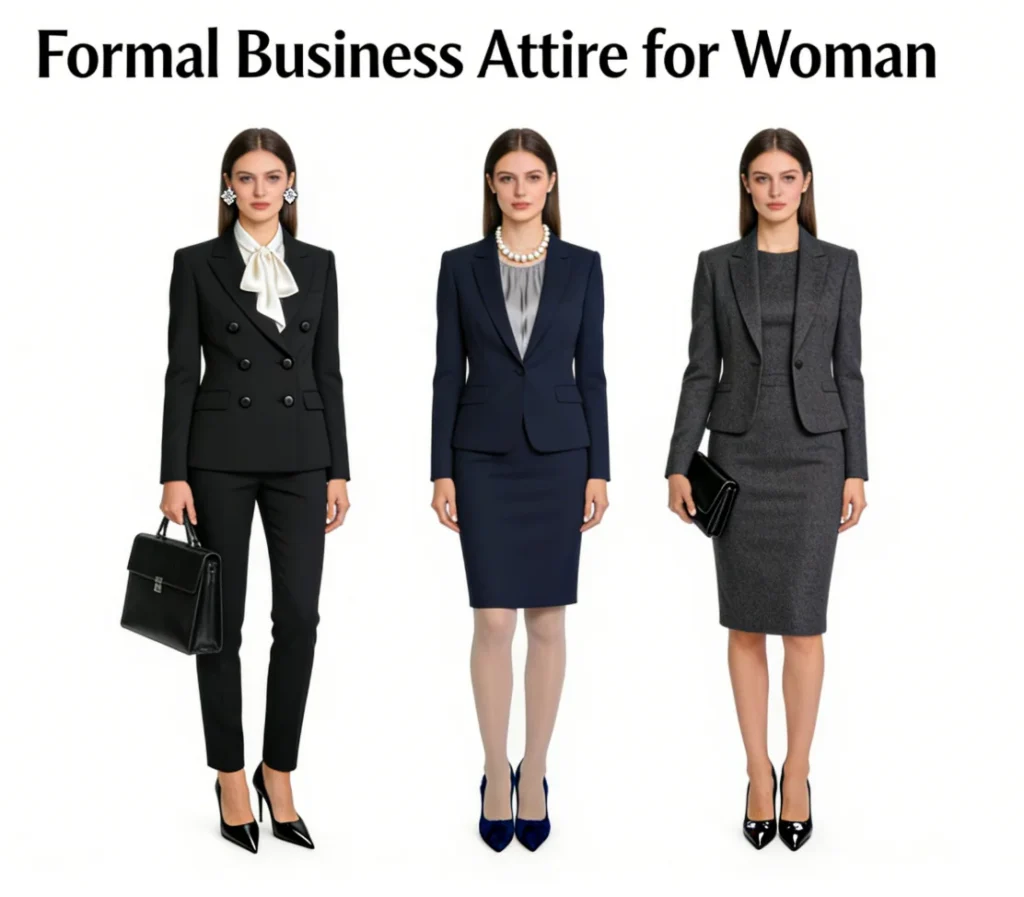
- Black double-breasted trousersuit + white silk blouse + black pointed heels + structured black briefcase + diamond studs.
- Navy suit jacket over skirt and light grey silk top, nude stockings, nude heels, and pearl necklace.
- dark grey wool-blend fitted dress + corresponding blazer + black patent heels + black clutch.
Interview Formal Attire
Interview attire should convey reliability, focus, and respect for the opportunity. Dress slightly more formally than the company’s daily standard.
👔 For Men:
Put on a dark suit that is well pressed and a light shirt with a nice tie. Footwear has to be polished; hair has to be trimmed.
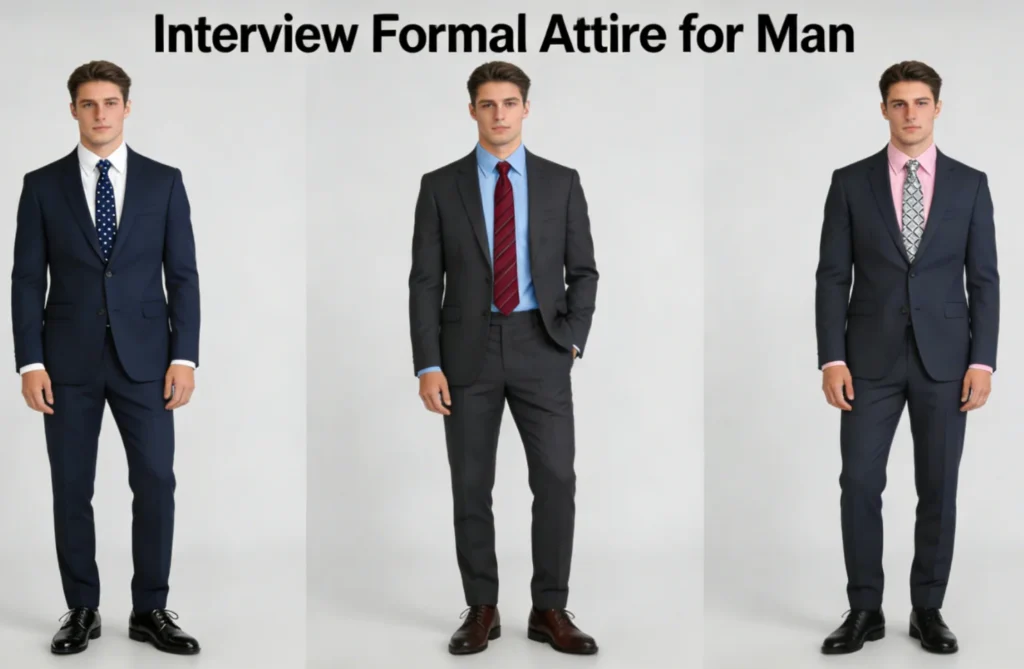
- Navy suit, white Oxford shirt, white dotted navy tie and black derby shoes.
- charcoal suit, light-blue shirt, burgundy striped tie and dark-brown Oxfords.
- Dark grey-blue suit + white pink shirt + silver geometric tie + black leather shoes.
👗For Women:
A jacket and a dress or a set of suits are desired. Natural makeup, low-key accessories, knee-length skirts and neutral colours are necessary.
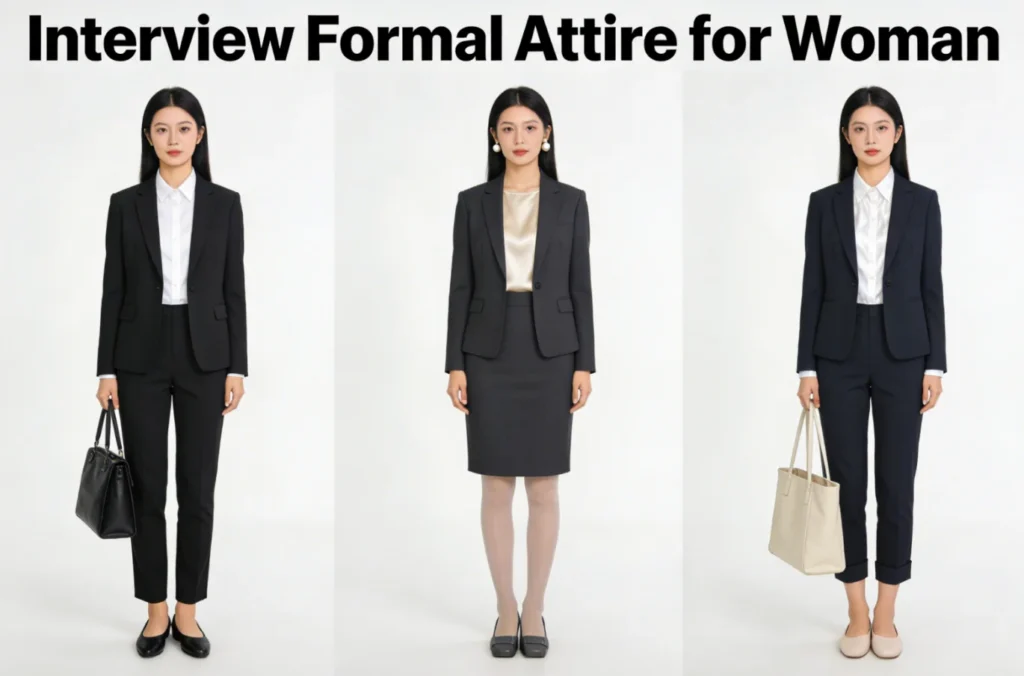
- Black trousers suit + white cotton shirt + black low heels + black handbag.
- Dark grey jacket suit + beige silk shirt + nude stockings + dark grey block heels + pearl earrings.
- Navy blazer + ankle trousers of the same colour + white silk blouse + nude flats + beige tote.
Taboo for Formal Attire in the Philippines
Influenced by Western culture and local traditions, formal occasions in the Philippines emphasise modesty and conservatism. Lightweight fabrics are common due to the tropical climate, but the structure must remain formal.
Formal Attire for Men
- Avoid flashy colours and loud prints; choose navy, grey, black, or white Barong shirts
- Ill-fitting or wrinkled clothing is unacceptable
- No sneakers or sandals; wear dark socks, no bare ankles
- Avoid excessive jewellery and casual accessories like caps
- Barong Tagalog should be tucked in with a plain undershirt that is not visible
Formal Attire for Women
- Avoid revealing cuts; cover shoulders in churches
- Do not wear sheer, overly shiny, or tight fabrics
- No sneakers or casual backpacks
- Keep makeup refined and hair neat
- At traditional weddings, avoid pure white or full black
Conclusion
The essence of formal attire lies in respecting the occasion and exercising personal discipline. By mastering dress codes, cultural considerations, and situational adaptability, you can appear confident and appropriate in any formal environment.
FAQs
Does formal attire always require a suit?
Not necessarily. Women may wear formal dresses or suit sets, and men may wear the Barong Tagalog in some settings. A suit remains the safest universal option.
How should formal attire fit differently for various body types?
Fit is crucial. Apple body types should avoid double-breasted jackets; pear shapes should balance shoulder structure and trousers. Tailoring is recommended.
Are there seasonal adjustments allowed in formal attire?
Yes. Summer allows lighter fabrics like linen blends and lighter shades; winter favours wool, cashmere, and deeper tones while keeping classic styles.
Can formal attire vary by country or workplace culture?
Yes. The Philippines accepts national dress, while Japanese workplaces prefer dark suits. Understanding local and corporate norms is essential.


