
When it comes to making a strong impression at work or in job interviews, the way you dress plays a significant role. In the Philippines, where professionalism and appearance often go hand in hand, business attire is more than just clothing—it reflects respect, confidence, and credibility. Whether you’re preparing for your first interview or dressing up for daily office life, knowing what’s considered appropriate business or corporate attire can make a big difference.
This guide will walk you through the essentials of business attire in the Philippines, from different types of workplace outfits to style tips for both women and men.
What is Business Attire?
Business attire refers to the standard clothing style professionals wear in formal or corporate settings. It is typically neat, polished, and conservative, designed to project a professional image.
In the Philippines, business attire varies depending on the company’s industry, culture, and dress code. For example, traditional financial institutions may expect formal business attire, while creative industries or tech startups might allow a more relaxed dress code.
In short, business attire is about dressing to match the occasion and workplace expectations while still feeling comfortable and confident.
Types of Business Attire in the Philippines
Not all business attire looks the same. Formality levels may vary depending on the setting. Here are the common types:
Formal Business Attire
Formal attire is the most traditional and polished form of workwear. It is typically expected in industries such as law, banking, government offices, and executive meetings.
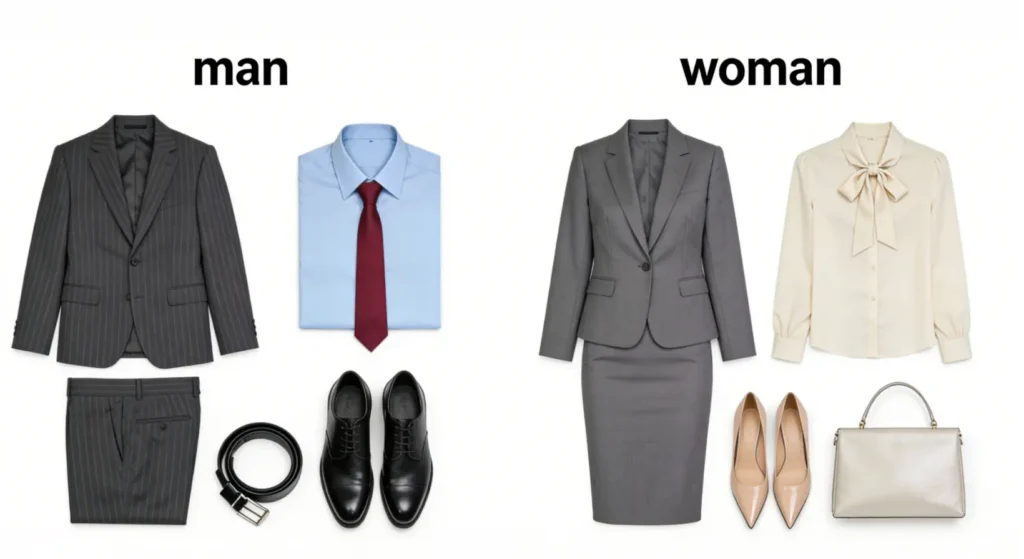
- Men: A suit and tie, leather shoes, and a pressed dress shirt.
- Business formal attire women: A tailored blazer with slacks or a pencil skirt, closed-toe heels, and minimal accessories.
Business Professional
Less rigid than formal attire but still very polished. This is common in office environments and professional industries.
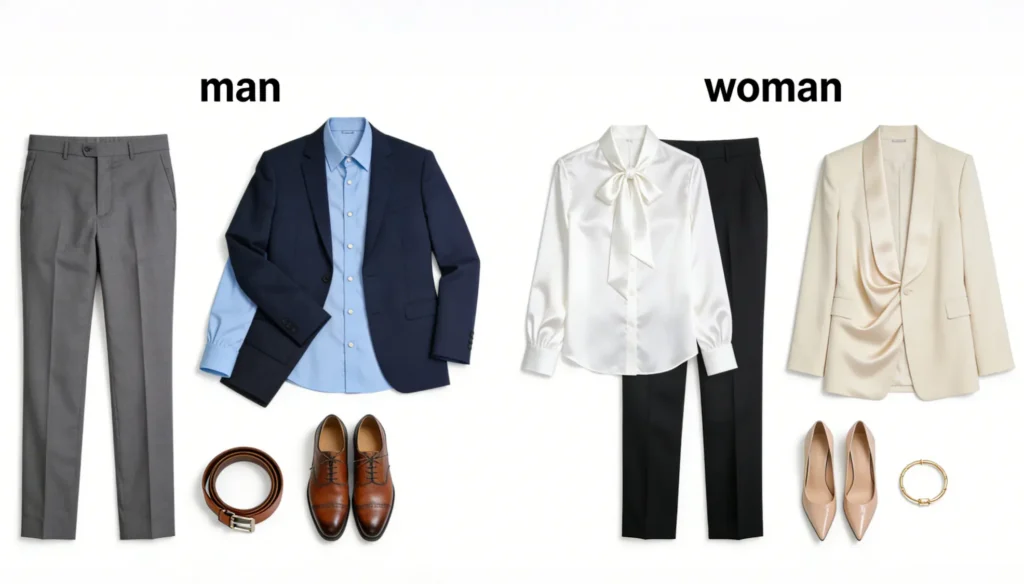
- Men: Dress pants, long-sleeve shirt, optional blazer, and leather shoes.
- Women: Blouses, skirts or slacks, blazers, and conservative shoes.
Business Casual Attire
Casual attire manages to stay professional while still being comfortable. Many modern companies in the Philippines, especially BPOs and IT firms, use this dress code.
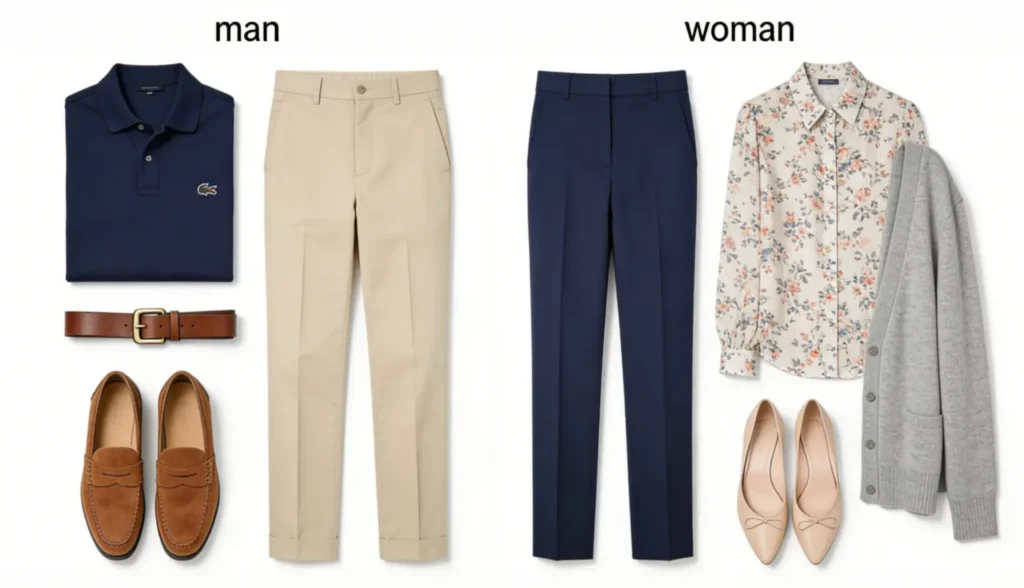
- Business casual attire for men: Polo shirts, chinos or slacks, and loafers.
- Business casual attire for women: Blouses, cardigans, bright skirts or pants, and flats or low heels.
Smart Casual
Though not strictly “business attire,” this is often accepted in workplaces with flexible dress codes or creative industries.
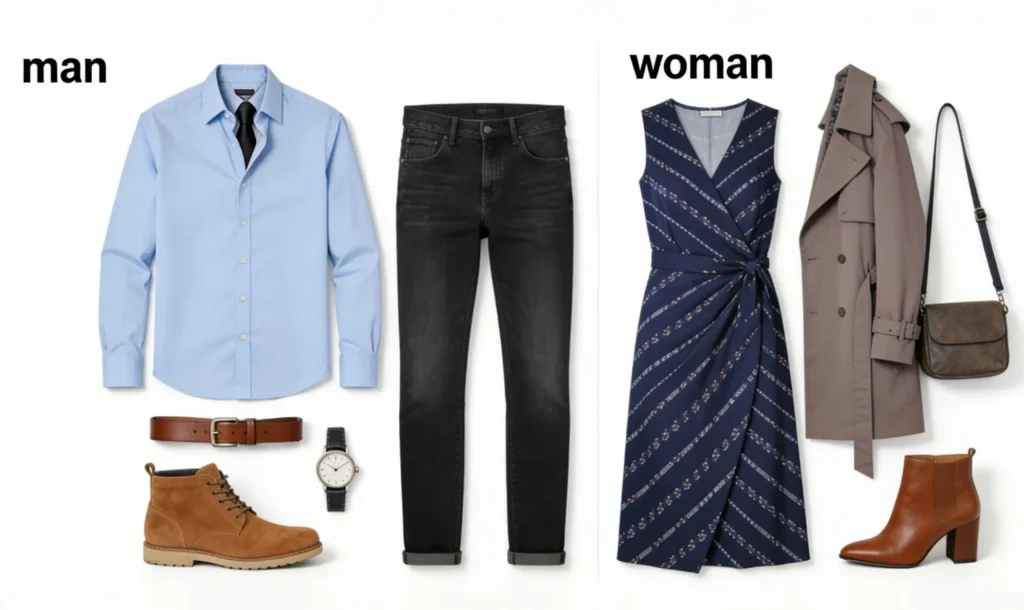
- Men: Polo shirts or long-sleeved without a tie, khakis, or jeans (if allowed).
- Smart casual for women: Dresses, stylish blouses, or tops paired with skirts or pants.
Business Attire for Women & Men in the Philippines
Business Attire for Women

When it comes to business attire worn by women in the Philippines, elegance and modesty are key. A neat and professional outfit communicates confidence without being overly flashy.
- Blouses & Tops: Neutral or pastel colors are standard, though prints can be acceptable if subtle. Avoid overly casual fabrics.
- Bottoms: Pencil skirts, A-line skirts, and slacks are preferred. Hemlines should generally be knee-length or longer.
- Footwear: Closed-toe shoes or low-to-medium heels work best. Flats are also acceptable in some offices.
- Accessories: Minimal jewelry and a structured handbag complete the look.
Women should also consider the tropical climate in the Philippines. Lightweight fabrics like cotton or linen blends can be practical choices while still looking professional.
Business Attire for Men

Men’s business attire in the Philippines typically consists of clean, well-fitted clothing.
- Shirts: Long-sleeve dress shirts in neutral shades such as white, blue, or gray are staples.
- Ties & Jackets: A tie is often required in formal settings, while blazers may be optional in business professional offices.
- Pants: Slacks in darker tones (black, navy, gray) are ideal.
- Shoes: Leather dress shoes or loafers are standard choices.
- Accessories: A classic wristwatch and belt often finish the look.
For men, grooming matters as much as clothing. A neat haircut, clean shave, and polished shoes enhance overall professionalism.
Tips for Dressing Professionally
Looking professional doesn’t always mean being uncomfortable or overdressed. Here are some practical tips to help you master business attire in the Philippines:
- Match the Company Culture – Research the workplace environment before choosing your attire. Start-ups may allow more relaxed styles compared to law firms.
- Fit is Key – Tailored clothing always looks better. Avoid baggy shirts, oversized suits, or skirts that ride too high.
- Stick to Neutrals – Black, white, gray, and navy are timeless choices. Adding color through accessories or light prints can elevate the look.
- Mind the Climate – Choose breathable fabrics, especially if you’re commuting in the tropical heat.
- Grooming Counts – Clean, well-maintained hair and shoes make a lasting impression.
Be Job-Ready with the Right Attire
When preparing for a job application or interview, having the proper attire is just as important as updating your resume. Dressing appropriately can make you stand out positively and boost your confidence.
If you’re actively searching for opportunities, you’ll want to pair the proper attire with the right platform. bossjob is a great place to start, offering a wide selection of job listings tailored for professionals in the Philippines. You can also explore their practical guide on job search sites in the Philippines
Final Thoughts
Business attire in the Philippines isn’t just about fashion—it’s about presenting yourself as capable, respectful, and ready to take on responsibilities. From formal business attire in traditional industries to more relaxed professional looks in modern offices, the key is understanding what’s appropriate for your role and company.
FAQs
What’s the difference between business attire and corporate attire?
Business attire is a broad term that includes formal, professional, and business casual clothing suitable for the workplace. Corporate attire, on the other hand, is usually more formal—think full suits, ties, and polished shoes, especially in industries like banking, law, or government.
For more details on corporate attire, see this guide on Corporate Attire in the Philippines.
Is business attire required for all job interviews in the Philippines?
Not always. While most companies expect formal or professional attire during interviews, some industries—like tech or creative fields—may be more lenient. However, it’s better to be slightly overdressed than underdressed. Dressing professionally shows respect and preparedness.
What are some budget-friendly options for workwear?
Simple blouses, tailored trousers, and basic blazers are cost-effective staples that can be mixed and matched for work. In the Philippines, affordable brands such as Uniqlo, H&M, Penshoppe, and SM Department Store labels offer professional styles at accessible prices.
What is not considered business attire?
Clothing that is overly casual, revealing, or worn out is generally not appropriate for a professional setting. Items like flip-flops, ripped jeans, sleeveless tops, and loud graphics should be avoided in most offices.
What are the dress code taboos in the Philippine workplace?
For both men and women, excessively casual clothing, strong fragrances, and unkempt appearances are commonly considered unprofessional. Women should avoid overly short or tight outfits, while men should avoid wearing slippers, shorts, or overly casual shirts in corporate environments.


