
When it comes to office fashion in the Philippines, finding the balance between professional and comfortable can be tricky. Especially with the country’s tropical weather, men often wonder what exactly business casual attire means—and how to pull it off without looking too formal or too laid-back.
If you’ve ever asked yourself, “What is business casual attire for men?” you’re not alone. The term can mean slightly different things depending on where you work, your company’s culture, and even the season. Let’s break it all down—from what pieces belong in your closet to how you can tailor your look for interviews, meetings, or just another day at the office.
What is Business Casual Attire for Men
“Business casual” is one of the most misunderstood dress codes. It sits right between formal corporate wear and smart casual, allowing a polished yet relaxed look. Think of it as: “You’re not wearing a suit, but you still look ready for business.”
In the Philippines, where workplaces are slowly becoming more flexible, business casual has become the go-to standard for many industries—from tech startups to marketing agencies. It keeps the professional tone without the stiffness of a full suit and tie.
Generally, business casual attire for men includes:
- Collared shirts like button-downs or polos
- Trousers or chinos, occasionally dark jeans
- Closed shoes such as loafers or leather sneakers
- Optional layers like blazers or lightweight jackets
Business Casual vs Business Formal: Key Differences
Business casual and business formal are two common workplace dress codes that are often misunderstood or used interchangeably. While both aim to present a professional image, they differ significantly in formality, purpose, and appropriate settings.
| Aspect | Business Formal | Business Casual |
|---|---|---|
| Overall formality | Highly formal and traditional | Semi-formal and relaxed |
| Typical workplace | Corporate offices, law firms, finance, government | Modern offices, startups, creative industries |
| Men’s attire | Full suit and tie, dress shirt | Dress shirt or polo, chinos or dress pants |
| Women’s attire | Tailored suit or formal business dress | Blouse, dress, skirt, or tailored pants |
| Jacket or blazer | Required | Optional |
| Tie requirement | Required | Optional or uncommon |
| Footwear | Formal leather dress shoes or heels | Loafers, flats, or clean dress shoes |
| Colors and patterns | Dark, solid, and conservative colors | Neutral with flexibility for subtle patterns |
| Level of flexibility | Very limited personal expression | Allows limited personal style |
| Common occasions | Interviews, formal meetings, executive events | Daily office wear, casual meetings |
In summary, business casual balances professionalism with comfort and flexibility, while business formal emphasizes authority, tradition, and strict dress standards. Choosing the correct dress code ensures you align with workplace expectations and make an appropriate professional impression.
If you want to understand how business attire differs from more traditional office looks, you can check out this guide to business attire in the Philippines.
Do and Don’ts of Business Casual Attire for Men
Do:
- Choose breathable fabrics such as cotton, linen, or lightweight blends to stay comfortable in warm and humid conditions.
- Wear well-fitted clothing that follows your body shape without being too tight or too loose.
- Stick to neutral and versatile colors like navy, gray, beige, and white for a polished, professional look.
- Keep footwear clean and appropriate, such as loafers, leather shoes, or minimalist dress sneakers if allowed.
- Pay attention to grooming, including neat hair and well-maintained accessories, to complete your outfit.
Don’t:
- Avoid overly casual items such as graphic T-shirts, sleeveless tops, ripped jeans, or flip-flops.
- Don’t wear wrinkled or worn-out clothing, as it can make even good outfits look unprofessional.
- Avoid loud colors and bold patterns that distract you from a clean, business-appropriate appearance.
- Don’t overdress like business formal unless required, as suits and ties may feel out of place in a casual business setting.
- Avoid heavy or thick fabrics that trap heat and cause discomfort during the workday.
Business Casual Attire for Men Examples for Different Seasons
Below are three practical business casual outfit examples for men, adapted to different seasons. Each example includes a complete outfit and appropriate accessories to create a polished, professional look.
Example 1: Spring Business Attire for Men Casual
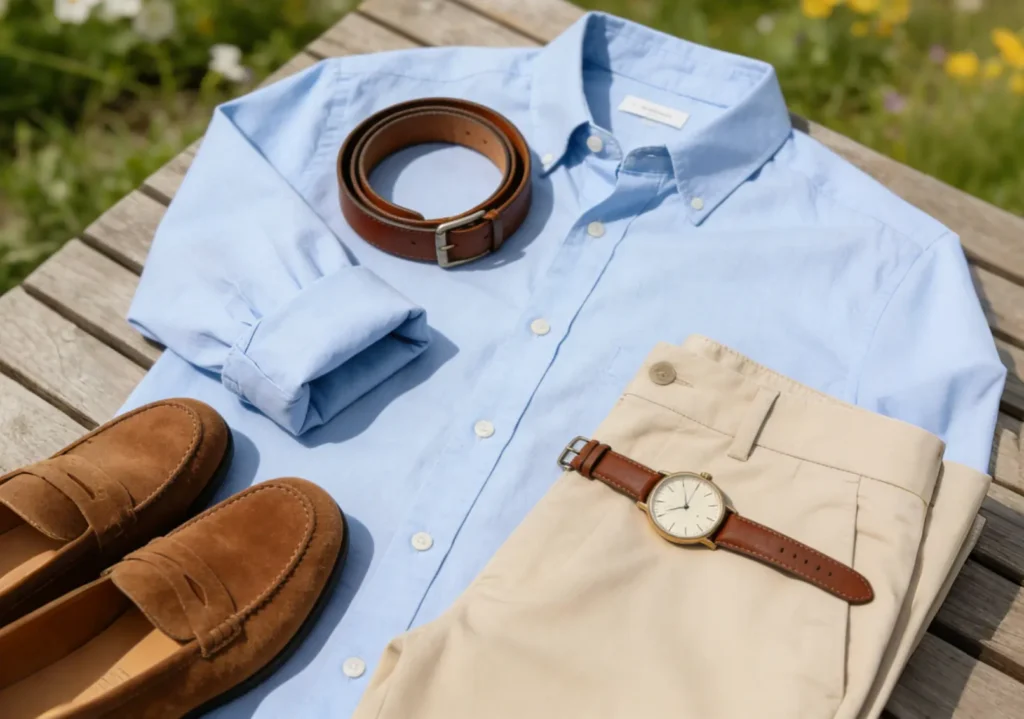
Spring weather is generally mild with occasional humidity, making light layering essential. A breathable long-sleeve button-down shirt in light blue paired with beige chinos creates a fresh, professional look, while brown loafers, a leather belt, and a classic wristwatch add polish without feeling heavy.
Example 2: Summer Business Casual
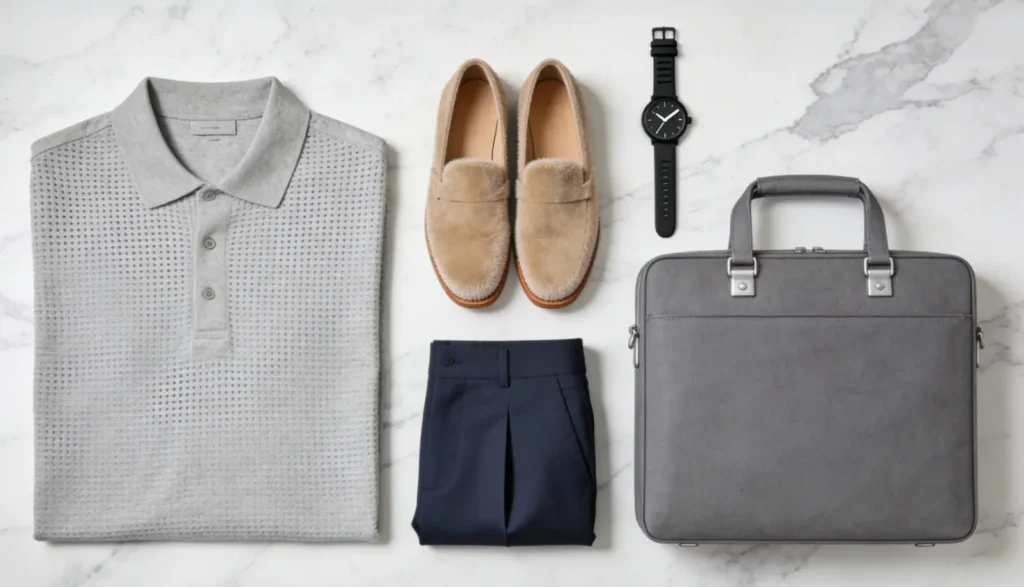
Summer is hot and humid, so staying cool while looking professional is the priority. A lightweight linen or short-sleeve polo shirt in white or light gray, worn with tailored navy trousers, keeps the outfit breathable, complemented by leather loafers, a minimalist watch, and a structured work bag for a clean finish.
Example 3: Fall Business Attire for Men Casual
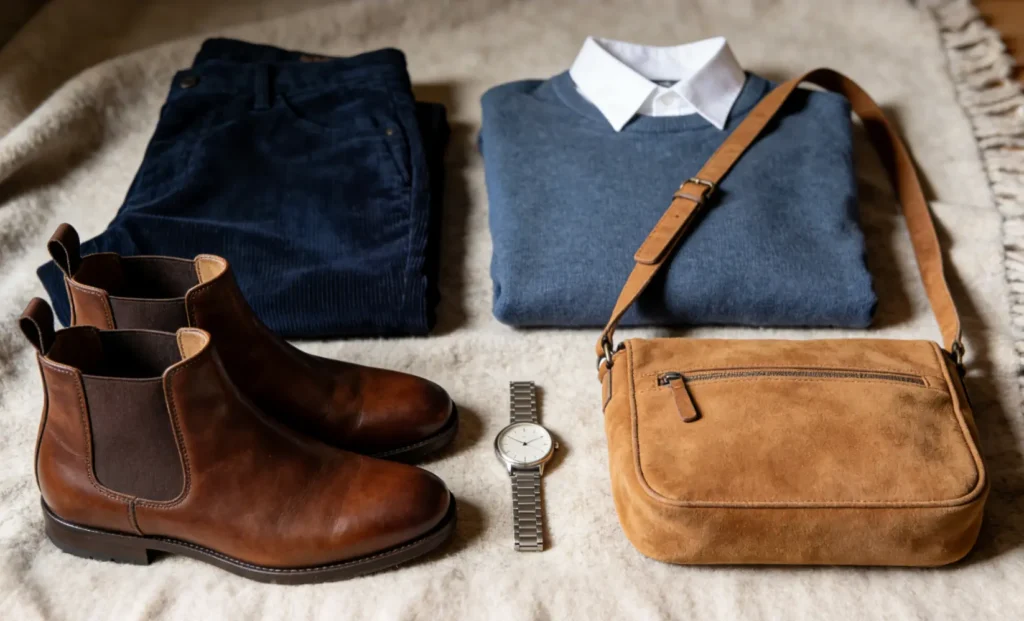
Fall brings slightly cooler temperatures, especially indoors, which makes light layering more practical. A collared shirt layered with a thin knit sweater and paired with dark chinos offers warmth and structure, while leather dress shoes, a simple watch, and a messenger bag complete the look.
Example 4:Winter Business Casual Attire for Men Fashion
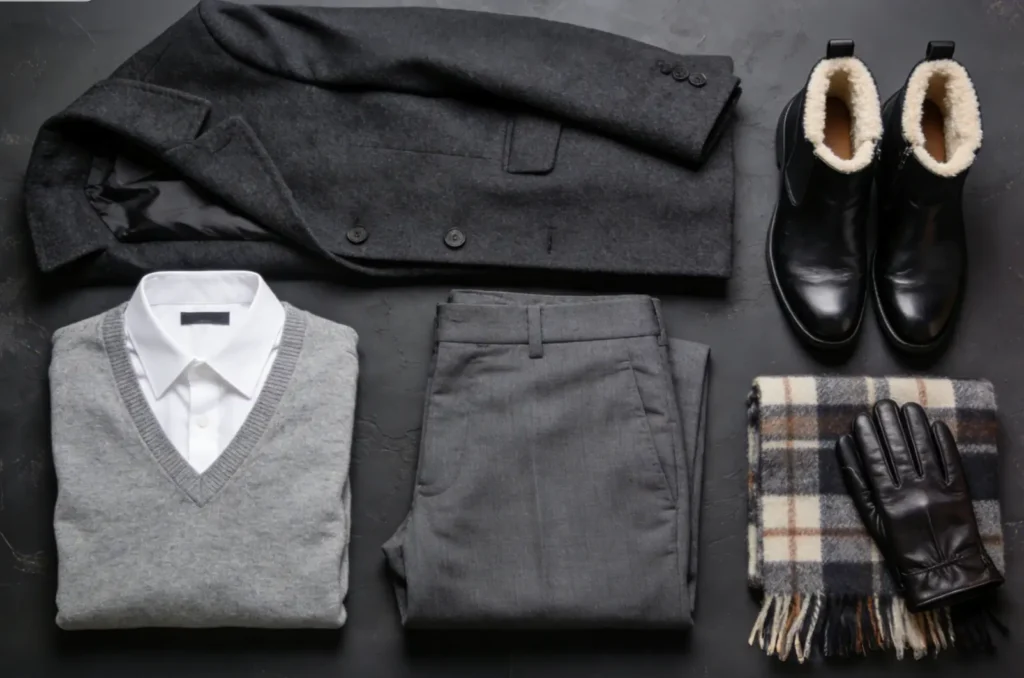
It’s cold, so pay attention to keeping warm. Wear a shirt and a V-neck cashmere sweater underneath, and a wool coat on top. Pair it with wool-blend trousers and leather ankle boots. Add a wool scarf and gloves for extra warmth.
Business Casual Attire for Men Interviews Across Different Industries
The meaning of business casual can shift depending on your field. The same outfit that fits a creative agency might feel too relaxed in a financial firm. Here’s how to adapt your business casual attire for men interview depending on your industry.
In tech or startup companies, flexibility is the norm. A clean polo shirt paired with chinos or dark jeans is perfectly acceptable. You can even wear sneakers as long as they look neat and not too sporty.
In finance or banking, professionalism remains key. Go for long-sleeved button-down shirts and well-pressed trousers. Keep your shoes formal, like loafers or derbies, and stick with neutral colors.
For those in creative or marketing roles, you have more freedom. Patterned shirts, bold colors, and slim-fit chinos can show off your personality without breaking dress code rules. Just remember to keep it tasty.
If you work in healthcare, pharma sales, or education, you’ll want to strike a balance—look friendly but still professional. Opt for collared shirts, khakis, and comfortable shoes that you can wear all day.
📖 Read more:Philippines Interview Costume Tips: Dress Right from Corporate to Casual
Conclusion
Business casual attire for men in the Philippines strikes the right balance between professionalism and comfort. It allows you to look sharp for meetings and presentations while staying comfortable in the country’s warm climate.
By choosing breathable fabrics, proper fits, and colors that reflect your personality, you project confidence without trying too hard. If you’re exploring new opportunities, check out bossjob’s onsite job listings and bossjob’s remote job listings.
FAQs About Business Casual Attire for Men
Where to buy business casual outfits in the Philippines?
You don’t need to spend much to look sharp. Stores like Uniqlo, H&M, Penshoppe, and Bench offer quality basics for business casual looks, while local tailors in Makati, Ortigas, and Cebu provide affordable custom fits for big men. You can also shop online through Zalora or Lazada for a wide range of styles and sizes.
Are there common mistakes to avoid in male business casual attire?
Yes, and they’re surprisingly easy to fix:
- Wearing jeans that are too light or distressed
- Leaving shirts wrinkled or untucked
- Choosing sneakers that are too flashy
- Ignoring fit—oversized or tight clothing looks unprofessional
- Mixing too many colors or patterns in one outfit
Focus on neatness, fit, and comfort. You don’t need expensive clothes—just well-maintained ones that make you look confident and composed.
Can I wear jeans every day in a business casual office?
It depends on your company. In creative industries, dark jeans are considered acceptable for daily wear. In more conservative offices, save them for Fridays or casual meetings. When in doubt, review your company’s dress code or simply observe how your coworkers present themselves.
What casual colors and fabrics work best for PH weather?
Light-colored tones such as white, beige, and pastels help reflect heat, while breathable fabrics like cotton and linen improve airflow in hot and humid conditions. Together, they keep casual outfits comfortable without sacrificing a clean, polished appearance.


